23/09/2026
Clinical and Laboratory Findings of the First Reported Oral Flumethrin Toxicity in a Cat
Kedide Bildirilen İlk Oral Flumetrin Toksisitesinin Klinik ve Laboratuvar Bulguları
Abstract
Flumethrin is an ectoparasiticide drug belonging to the α-cyano pyrethroid group, which is a longacting drug due to its lipophilic structure. Although its absorption after oral administration is slow, its ability to remain in systemic circulation for a long time causes clinical signs to appear later and persist longer. This case report discusses the acute toxicity observed in a cat that ingested a topical preparation intended for dogs and containing flumethrin. The cat exhibited neurological symptoms such as hypersalivation, tremors, and lethargy. Later laboratory findings revealed elevated hepatic enzyme levels. Clinical improvement was observed on day 14 following symptomatic treatment. Haematological and biochemical parameters returned to normal by day 30. This case demonstrates that exposure to pyrethroids may cause serious toxic effects, particularly in cats.
Keywords: Flumethrin, pyrethroid, toxicity
Öz
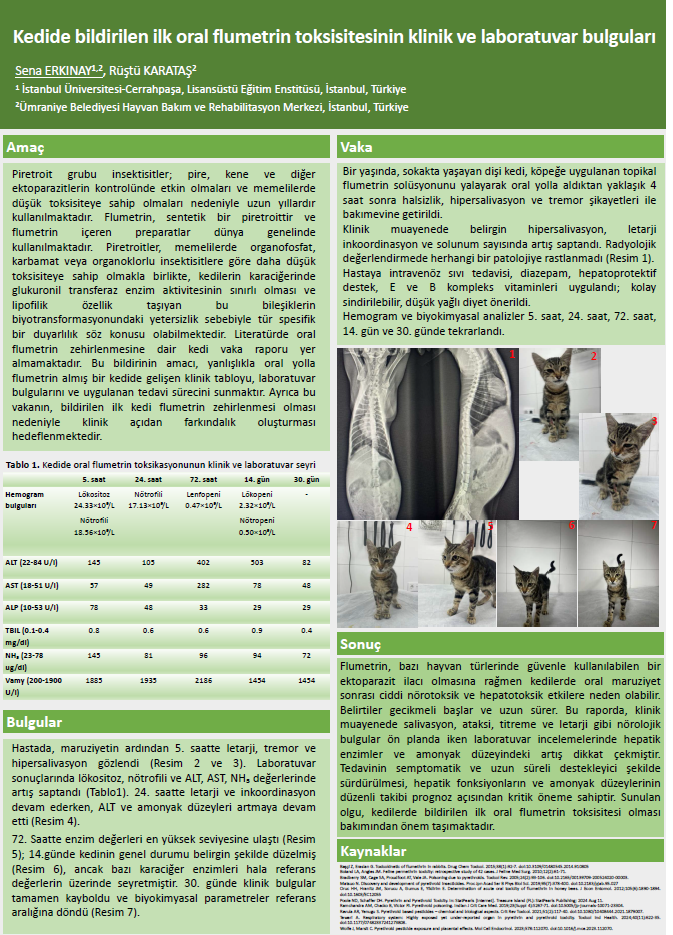
Flumetrin, α-siyano piretroitler grubunda yer alan, lipofilik yapısı nedeniyle uzun etki süresine sahip bir ektoparaziter ilaçtır. Oral alım sonrası emilimi yavaş olmakla birlikte sistemik dolaşımda uzun süre kalabilmesi, klinik belirtilerin gecikmeli ortaya çıkmasına ve daha uzun seyretmesine neden olmaktadır. Bu olgu sunumunda, köpeğe uygulanan flumetrin içeren topikal preparatı oral yolla alan bir kedide gelişen akut toksisite tablosu ele alınmıştır. Kedide hipersalivasyon, tremor ve letarji gibi nörolojik semptomlar gözlemlenmiş, laboratuvar bulgularında hepatik enzim seviyelerinde artış dikkat çekmiştir. Uygulanan semptomatik tedavi ile 14. günde klinik iyileşme görülmüş, 30. günde ise hematolojik ve biyokimyasal parametreler normale dönmüştür. Bu olgu, özellikle kedilerde piretroit maruziyetinin ciddi toksik etkilere yol açabileceğini göstermektedir.
Anahtar Kelimeler: Flumetrin, piretroit, toksikasyon
Introduction
The control of ectoparasites is of great importance in both veterinary medicine and public health. Ectoparasites such as fleas, ticks, and mosquitoes can lead to blood loss, allergic dermatitis, and discomfort in the host, as well as serious systemic infections due to the pathogens they vector. For this same reason, natural and synthetic insecticides have been widely used in ectoparasite control for many years (Bradberry et al., 2005; Wismer and
Means, 2012; Wolfe and Marsit, 2023).
Natural pyrethrins, compounds obtained from Chrysanthemum cinerariafolium flowers, are known for their insecticidal activity. However, their effectiveness is limited due to their sensitivity to environmental factors such as light and heat. To overcome this limitation, the chemical structure of pyrethrins has been modified to develop more stable, persistent, and potent synthetic derivatives known as pyrethroids (Anadon et al., 2009; Barrios-Arpi et al.,
2022). Pyrethroids are a class of insecticides used in veterinary medicine and agriculture. Their low toxicity compared to similar effective drugs in mammals, their broad spectrum of activity, and their environmental persistence are important factors in the preference for these compounds (Bradberry et al., 2005; Başçı and Erarslan, 2015; Wolfe and Marsit, 2023).
Pyrethroids can be absorbed dermally and orally. Pyrethroids primarily inhibit voltage-gated sodium channels, leading to prolonged depolarization and hyperexcitability in neurons (Davies et al., 2007; Soderlund, 2012). Based on the presence or absence of an α-cyano group in their structure, they are basically divided in two separate groups as Type I and Type II (Poole and Schaffer, 2004). Type I pyrethroids do not contain an α-cyano group in their
structure and can cause tremor syndrome (T-syndrome), which is clinically characterized by tremors, ataxia, hyperactivity, and incoordination. Type II pyrethroids, on the other hand, have a stronger neurotoxic effect due to the α-cyano group that they contain and can cause C-S syndrome (choreoathetosis-salivation syndrome), characterized by hypersalivation, convulsions, tremors and respiratory depression (Davies et al., 2007; Ravula and Yenugu, 2021; Poole and Schaffer, 2024).
Pyrethroids are generally metabolized rapidly in the liver through oxidation, hydrolysis, and conjugation pathways, although their biotransformation rate may vary depending on stereochemical differences (Wismer and Means, 2012). Flumethrin belongs to the Type II pyrethroids and can be used alone or in combination with other ectoparasiticides and is currently formulated with imidacloprid in several commercial products (Başçı and Erarslan,
2015). This lipophilic ectoparasiticide drug is particularly effective in the controlling ticks, lice, and mites. Its lipophilicity provides long-lasting effects but also increases the risk of accumulation in tissues and entry into the enterohepatic circulation after absorption (Anadon et al., 2009; Başçı and Erarslan, 2015). Although topical preparations containing flumethrin are considered safe for dogs, they can cause serious neurotoxic and hepatotoxic conditions in cats, especially after oral exposure. Cats are more likely than dogs to develop pyrethroid toxicosis as their liver is inefficient at glucuronide conjugation, which further delays the biotransformation of this compound (Anadon et al., 2009).
There are limited data in the literature regarding flumethrin-related toxicity in cats, and to date, no detailed case reports have described the clinical progression following oral exposure. This study aims to contribute to the literature by reporting the clinical, haematological, and biochemical findings observed in a cat after accidental oral ingestion of a topical preparation containing flumethrin, providing valuable insight for both veterinarians and researchers.
Case History
One-year-old female stray cat weighing approximately 1.5 kg was brought to the shelter presenting with lethargy, incoordination, salivation, rapid breathing, and tremors. According to the history, the cat was observed licking a 1% flumethrin solution (10 mg/mL) that had been applied topically to a dog sharing the same yard approximately 30 minutes after the application. The amount applied to the dog was reportedly 4 mL, but the exact amount ingested orally by the cat was unknown. Approximately 2 hours after the oral exposure, depression and lethargy were observed; at the 4-hour mark, hypersalivation, foaming at the mouth, tremors, and convulsions were observed (Figure 1). Based on the history and clinical findings, a preliminary diagnosis of acute pyrethroid toxicity was made.
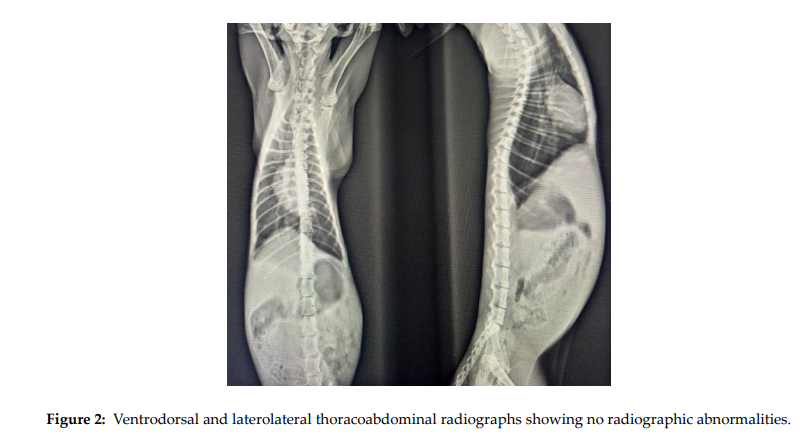
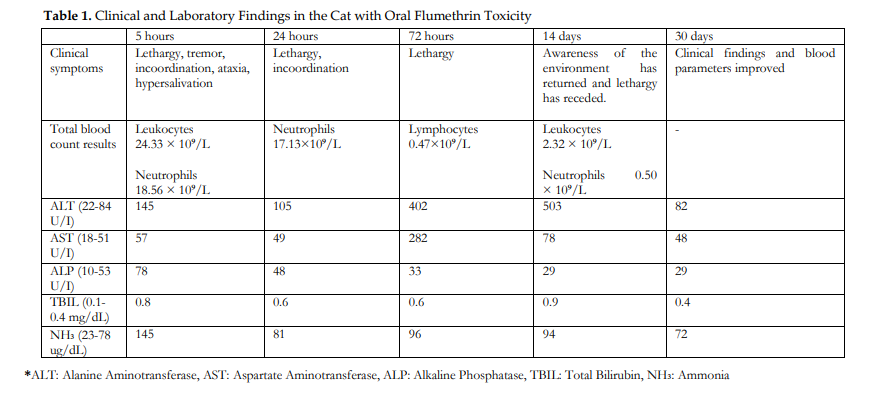
Approximately 5 hours after exposure, a physical examination revealed lethargy, ataxia, tremor, anisocoria, and hypersalivation. Respiratory rate was at 45 breaths per minute. Body temperature and heart rate were determined to be within the reference range. No pathological findings were detected in the ventrodorsal or laterolateral radiographs of the thorax and abdomen (Figure 2). Haematological and biochemical analyses were performed at 5, 24, and, 72 hours post-exposure, and subsequently on days 14 and 30 (Table 1). Blood samples were collected as part of routine clinical evaluation and diagnostic procedures. No experimental intervention was performed and therefore ethical approval was not required.
During the first 72 hours, intravenous lactated Ringer’s solution (10 mL/kg/h) was administered to the patient while providing flow-by oxygen. Diazepam (1 mg/kg, intravenously) was added to the treatment to control tremors and seizures, and maropitant sodium (1 mg/kg, subcutaneously) was also added to reduce hypersalivation. During the first 30 days, to support liver function, the cat was administered a hepatoprotective agent containing silymarin (Silybum marianum extract, 1 tablet/10 kg, orally), along with
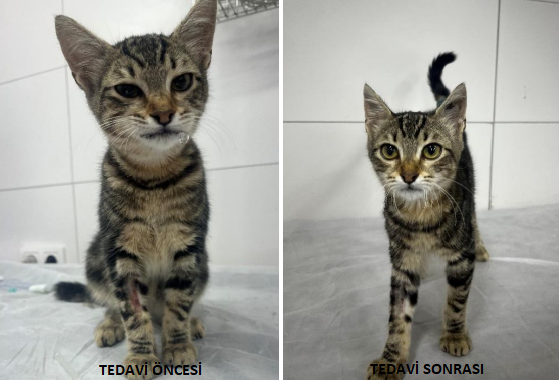
vitamin C (ascorbic acid, 50 mg/kg, IM) and B complex vitamins 1 mL/day, IM). The cat’s clinical condition showed a significant improvement by day 14. A complete recovery was observed by day 30, with both clinical and biochemical parameters returning to normal (Figure 3).
Discussion and Conclusion
Pyrethroids can cause serious clinical symptoms, particularly in cats due to metabolic limitations. Type II pyrethroids, such as flumethrin, are ectoparasiticide drugs used in veterinary medicine and considered safe for dogs. However, cats’ increased sensitivity to these compounds can lead to life-threatening toxic reactions, especially in cases of oral exposure. The lack of reports on oral flumethrin toxicity in cats makes this case clinically unique and important.
The clinical picture observed in this case report was consistent with C-S syndrome, characteristic of Type II pyrethroid toxicity. The findings of hypersalivation, tremor, convulsions, lethargy and incoordination detected in the cat reflect the effects of flumethrin on the central nervous system (Figure 1). Type II pyrethroids can cause repetitive action potentials in the membrane of nerve cells and nerve hyperexcitability by prolonging the closure time of voltage-dependent sodium channels (Bradberry et al., 2005; Soderlund, 2012). Furthermore, the inhibition of gamma-aminobutyric acid (GABA) mediated chloride channels can delay neural repolarization, thereby exacerbating tremors and convulsions (Davies et al., 2007; Anadon et al., 2009).
Flumethrin is one of the compounds with the highest neurotoxic potential among Type II pyrethroids due to the presence of α-cyano group in its structure. The presence of a α-cyano group can cause longer-lasting disturbances in nerve transmission and therefore more severe symptoms (Ravula and Yenugu, 2021). The neurological symptoms that developed after exposure and the prolonged clinical course in this case are consistent with these characteristics.
From a pharmacokinetic perspective, flumethrin exhibits lipophilic properties and can enter the enterohepatic circulation (Başçı and Erarslan, 2015). Slow but continuous absorption from the gastrointestinal system and a long elimination half-life cause accumulation in tissues and prolonged clinical symptoms. The study of Basci and Erarslan (2015) also explains that the long elimination half-life accounts for the persistence of flumethrin in tissues. Furthermore, its lipophilic structure facilitates passage through the blood-brain barrier, which leads to prominent central nervous system effects (Wismer and Means, 2012). The neurological symptoms observed within 24 hours after exposure are consistent with the above-mentioned.
One reason for cats’ susceptibility to pyrethroid toxicity is their limited glucuronidation capacity. Due to the low activity of the uridine diphosphate (UDP) glucuronosyltransferase enzyme, the metabolic detoxification of lipophilic compounds such as flumethrin occurs slowly (Anadon et al., 2009; Poole and Schaffer, 2024). This leads to the compound remaining in the body for a longer period and an increase in the hepatic metabolic load. In this case, the observed increases in ALT, AST and the total bilirubin levels indicate that the liver is affected (Table 1). The increase in ammonia levels also suggests impaired hepatic detoxification and an increased risk of potential encephalopathy (Anadon et al., 2009).
The increase in ALT and AST values became apparent 72 hours after exposure, as shown in Table 1, while haematological changes persisted until the 14th day. These findings, along with flumethrin’s effect on enterohepatic circulation and the suppression of the immune system after toxic stress, support this conclusion (Wolfe and Marsit, 2023). The return of all values to normal by day 30 may indicate that the liver’s regenerative capacity was preserved.
Since there is no specific antidote for pyrethroid poisoning, symptomatic treatment is the mainstay of care. The intravenous fluid therapy administered in this case aimed to facilitate the renal elimination of flumethrin, and promote the removal of the toxin from the body. Additionally, fluid therapy is critically important for maintaining electrolyte balance. Diazepam, as a GABA receptor agonist, has been effective in controlling neurological symptoms (Ramchandra et al., 2019; Poole and Schaffer, 2024). Silymarin, administered as
hepatoprotective support, contributed to the improvement of liver function with its antioxidant, antifibrotic and membrane stabilizing properties (Tewari, 2024).
Some studies have indicated that environmental factors, particularly temperature changes, affect the severity of pyrethroid toxicity. At low temperatures, the elimination rate of pyrethroids decreases, resulting in longerlasting neurological symptoms (Ravula and Yenugu; 2021). However, the environmental temperature was not recorded in the present case.
This case report is the first to present clinical, haematological, and biochemical findings of oral flumethrin toxicity in a cat, highlighting the potential risks associated with the use of topical ectoparasiticides, particularly in environments where cats and dogs coexist.
This case demonstrates the clinical, haematological, and biochemical course of toxicity in a cat following oral flumethrin exposure. The use of pyrethroids in cats is not recommended. Where cats and dogs live together, the use of pyrethroids should be strictly controlled to prevent accidental exposure. Early diagnosis, symptomatic treatment, and monitoring of liver function are shown to play an important role in clinical recovery.
References
Anadón, A., Martínez-Larrañaga, M. R., Martínez, M. A. (2009). Use and abuse of pyrethrins and synthetic pyrethroids in veterinary medicine. Veterinary journal (London, England: 1997), 182(1), 7–20. https://doi.org/10.1016/j.tvjl.2008.04.008
Barrios-Arpi, L., Arias, Y., Lopez-Torres, B., Ramos-Gonzalez, M., Ticli, G., Prosperi, E., Rodríguez, J. L. (2022). In Vitro Neurotoxicity of Flumethrin Pyrethroid on SH-SY5Y Neuroblastoma Cells: Apoptosis Associated with Oxidative Stress. Toxics, 10(3), 131. https://doi.org/10.3390/toxics10030131
Başçi, Z., & Eraslan, G. (2015). Toxicokinetic of flumethrin in rabbits. Drug and chemical toxicology, 38(1), 92– 97. https://doi.org/10.3109/01480545.2014.910805
Bradberry, S. M., Cage, S. A., Proudfoot, A. T., Vale, J. A. (2005). Poisoning due to pyrethroids. Toxicological reviews, 24(2), 93–106. https://doi.org/10.2165/00139709-200524020-00003
Davies, T. G., Field, L. M., Usherwood, P. N., Williamson, M. S. (2007). DDT, pyrethrins, pyrethroids and insect sodium channels. IUBMB life, 59(3), 151–162. https://doi.org/10.1080/15216540701352042
Poole, N. D., Schaffer, D. H. (2024). Pyrethrin and Pyrethroid Toxicity. In StatPearls. StatPearls Publishing.
Ramchandra, A. M., Chacko, B., Victor, P. J. (2019). Pyrethroid Poisoning. Indian journal of critical care medicine: peer-reviewed, official publication of Indian Society of Critical Care Medicine, 23(Suppl 4), S267–S271. https://doi.org/10.5005/jp-journals-10071-23304
Ravula, A. R., Yenugu, S. (2021). Pyrethroid based pesticides – chemical and biological aspects. Critical reviews in toxicology, 51(2), 117–140. https://doi.org/10.1080/10408444.2021.1879007
Soderlund D. M. (2012). Molecular mechanisms of pyrethroid insecticide neurotoxicity: recent advances. Archives of toxicology, 86(2), 165–181. https://doi.org/10.1007/s00204-011-0726-x
Tewari A. (2024). Respiratory system: Highly exposed yet under-reported organ in pyrethrin and pyrethroid toxicity. Toxicology and industrial health, 40(11), 622–635. https://doi.org/10.1177/07482337241273808
Wismer, T., Means, C. (2012). Toxicology of newer insecticides in small animals. The Veterinary clinics of North America. Small animal practice, 42(2), 335–viii. https://doi.org/10.1016/j.cvsm.2011.12.004
Wolfe, J., Marsit, C. (2023). Pyrethroid pesticide exposure and placental effects. Molecular and cellular endocrinology, 578, 112070. https://doi.org/10.1016/j.mce.2023.112070
Erkınay, S., & Karataş, R. (2026). Clinical and Laboratory Findings of the First Reported Oral Flumethrin Toxicity in a Cat. Kocatepe Veterinary Journal, 19(2), 248-254. https://doi.org/10.30607/kvj.1831589